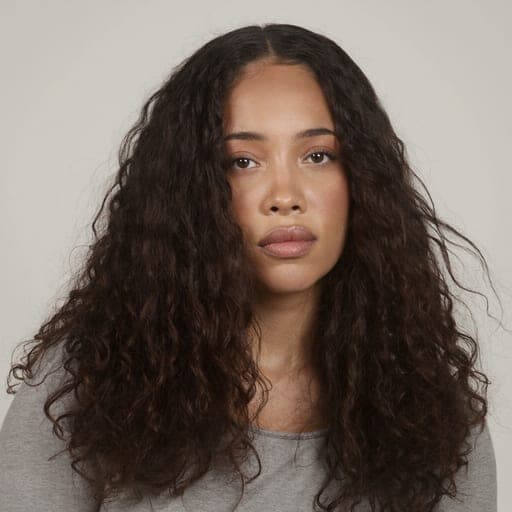
Hairstyle guide

Hairstyles for an Oval Face

An oval face is slightly longer than it is wide, with a forehead marginally broader than the jaw and a chin that curves rather than points. It is the shape most cutting guides quietly treat as the default, which is why so much advice for other shapes is phrased as moving toward it.

The practical consequence is unusual: almost nothing is ruled out. That sounds like good news and mostly is, but it also means face shape is no longer a useful filter for you, and you need a different one.

The aim

Nothing needs correcting, so choose on hair texture and how much upkeep you want rather than on shape.

The mistake to know about first

Choosing on shape at all. With nothing to correct, the deciding factors are your hair's natural texture, how much time you will genuinely spend on it each morning, and how often you are willing to sit in a salon chair. Picking a cut that fights your texture is the real risk here.

11 cuts that suit an oval face

Each of these carries the reason it works and what it costs you in upkeep — the half of the decision that gets left out most often.

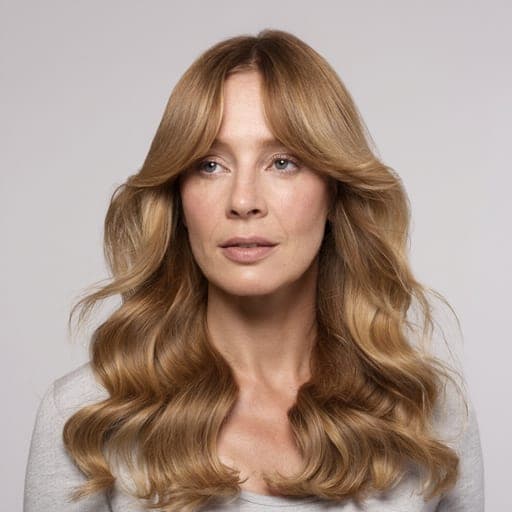
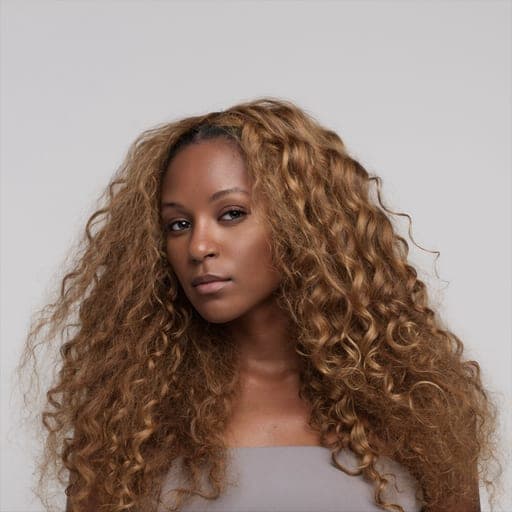
A woman with long layers: Shoulder-length or longer, cut in graduated layers so the hair moves instead of hanging in one block.LongAI illustration

Long Layers

Shoulder-length or longer, cut in graduated layers so the hair moves instead of hanging in one block.

Why it works: The vertical line lengthens a round face, and the softness at the ends takes the edge off a strong jaw.

Low upkeepTrim every 10–12 weeks. Air-dries acceptably.
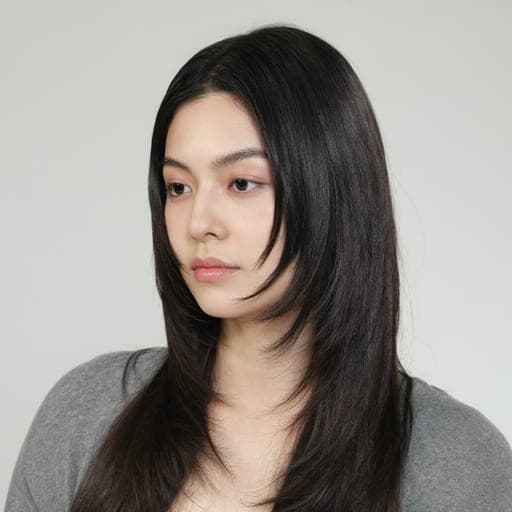
A woman with face-framing layers: Long layers cut shorter around the face only, starting at or below the cheekbone.LongAI illustration

Face-Framing Layers

Long layers cut shorter around the face only, starting at or below the cheekbone.

Why it works: Diagonal lines across the cheek break up a square jaw and a long straight cheek line at once.

Some upkeepTrim every 8–10 weeks or the shortest pieces lose their shape.
A woman with curtain bangs: A long fringe parted in the middle and swept outward, blending into the length at the cheekbone.LongAI illustration

Curtain Bangs

A long fringe parted in the middle and swept outward, blending into the length at the cheekbone.

Why it works: Covers width at the forehead and shortens a long face without the commitment of a blunt fringe.

Some upkeepFringe trim every 4–6 weeks; needs a round brush most mornings.
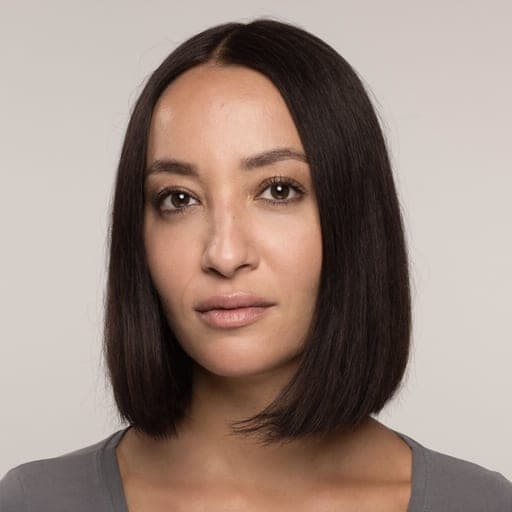
A woman with blunt lob: A long bob cut to one length, ending somewhere between the jaw and the collarbone.Mid-lengthAI illustration

Blunt Lob

A long bob cut to one length, ending somewhere between the jaw and the collarbone.

Why it works: The blunt weight at the bottom builds width exactly where a heart-shaped face narrows.

Some upkeepTrim every 8 weeks to keep the line sharp.
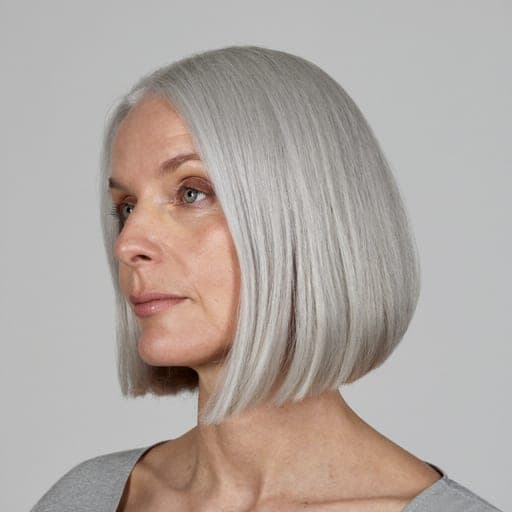
A woman with angled bob: A bob cut shorter at the back and longer at the front, with the longest pieces past the jaw.Mid-lengthAI illustration

Angled Bob

A bob cut shorter at the back and longer at the front, with the longest pieces past the jaw.

Why it works: The forward diagonal pulls the eye down the face rather than across it.

High upkeepTrim every 6 weeks; the angle blurs quickly as it grows.
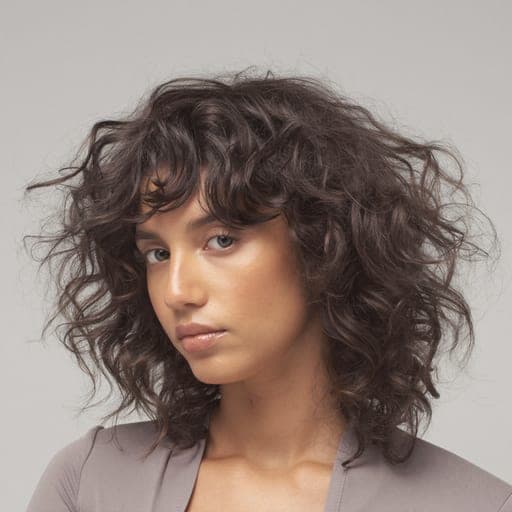
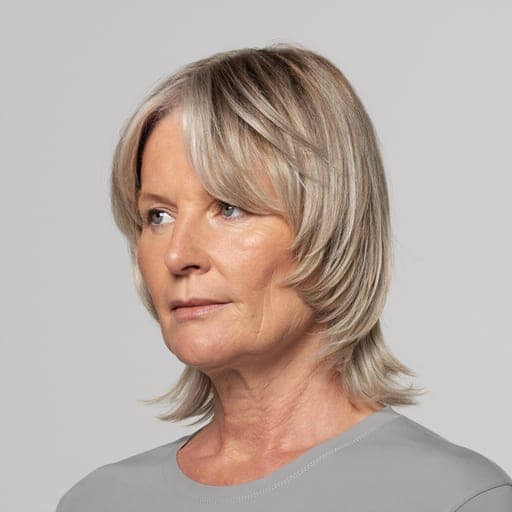
A woman with shoulder-length shag: Heavily layered and textured through the mid-lengths, usually with a fringe.Mid-lengthAI illustration

Shoulder-Length Shag

Heavily layered and textured through the mid-lengths, usually with a fringe.

Why it works: Texture in every direction breaks up straight edges and adds width where the face is narrow.

Low upkeepTrim every 10–12 weeks. Designed to look better unstyled.
A woman with wolf cut: A shag taken further — short, heavy layers at the crown falling into wispy lengths.Mid-lengthAI illustration

Wolf Cut

A shag taken further — short, heavy layers at the crown falling into wispy lengths.

Why it works: Height at the crown lengthens a round face while the messy ends soften a hard jaw.

Low upkeepTrim every 10–12 weeks. Thrives on air-drying.
A woman with butterfly cut: Long hair with two layer lengths — short face-framing pieces over long ends, so it reads as short and long at once.LongAI illustration

Butterfly Cut

Long hair with two layer lengths — short face-framing pieces over long ends, so it reads as short and long at once.

Why it works: The shorter top layers add width at the cheek while the length keeps the overall line vertical.

Some upkeepTrim every 8–10 weeks; needs volume at the roots to work.
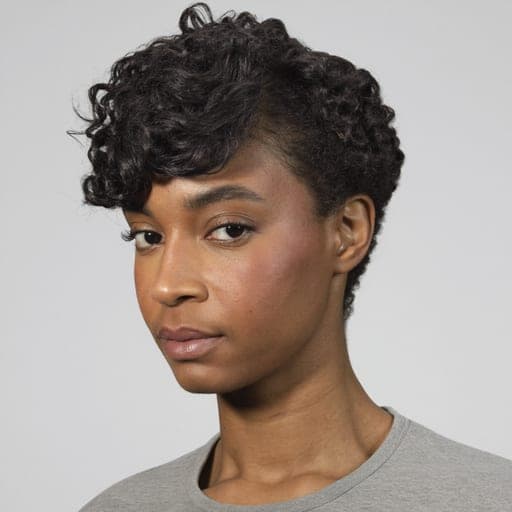
A woman with classic pixie: Cropped short all over with a little length left on top to style.ShortAI illustration

Classic Pixie

Cropped short all over with a little length left on top to style.

Why it works: Hides nothing, so it needs balanced proportions to begin with.

High upkeepTrim every 4–5 weeks — a pixie grows out of shape fast.
A woman with bixie: Between a bob and a pixie — short, layered, with length left over the ears and at the nape.ShortAI illustration

Bixie

Between a bob and a pixie — short, layered, with length left over the ears and at the nape.

Why it works: The layers over the ears add width at the temples where a diamond face is narrowest.

Some upkeepTrim every 6 weeks.
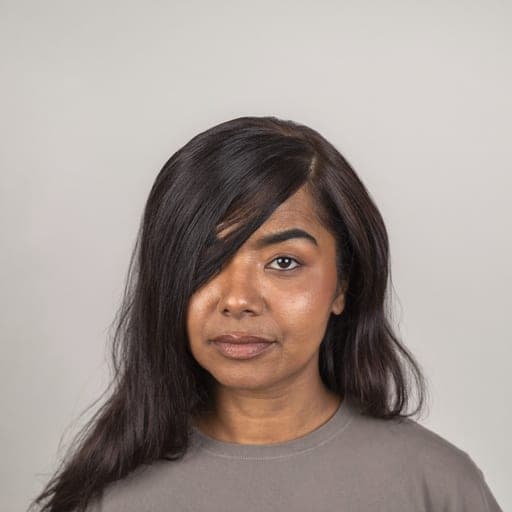
A woman with deep side part: Any length, parted far to one side so the hair falls asymmetrically across the forehead.LongAI illustration

Deep Side Part

Any length, parted far to one side so the hair falls asymmetrically across the forehead.

Why it works: An asymmetric line is the cheapest way to break up a symmetrical, wide or angular face.

Low upkeepFree — it's a parting, not a cut. Worth trying before you book anything.

Fringe and bangs for an oval face

Every fringe is on the table — blunt, curtain, side-swept, micro. The only real constraint is that a very heavy full fringe can shorten the face enough to tip the proportions toward round, so if you like the balance you have, keep some forehead visible.

Curtain bangs are the low-commitment option: they grow out into face-framing layers rather than into an awkward stage, which matters if you are unsure.

What to think twice about

  • Heavy full fringe that hides the forehead entirely
  • Flat styles with no movement at the crown

The short avoid list here is not about shape. Flat styles with no movement waste the one thing an oval face gives you — the freedom to add shape wherever you want it — and a fringe heavy enough to hide the forehead entirely trades your proportions for nothing in return.

How to tell if this is your shape

Your face is longer than it is wide, by roughly a third to a half. The forehead is a little wider than the jaw, and both are narrower than the cheekbones.

The giveaway is the chin: rounded rather than pointed, and without the visible corner at the back of the jaw that marks a square face.

Or measure it from a photo — it takes a few seconds and runs entirely in your browser.

The same proportions decide your frames, and the answer is not always the same one: glasses for oval faces.

FAQ

Common questions

Is an oval face actually the best face shape?
It is the most versatile for hair, which is a different claim. The idea that it is the ideal comes from classical proportion theory, not from anything you should organise your haircut around. What it genuinely means is that your cut is a free choice.
What should I choose instead of shape, then?
Texture and upkeep. Fine straight hair holds a blunt line well and struggles with heavy layers; thick wavy hair does the reverse. And be honest about the morning: a cut needing twenty minutes of blow-drying is the wrong cut if you have five.
Can an oval face wear a very short pixie?
Yes — it is one of the few shapes a close crop reliably flatters, because a pixie hides nothing and relies on the proportions underneath being balanced. Budget for a trim every four to five weeks.