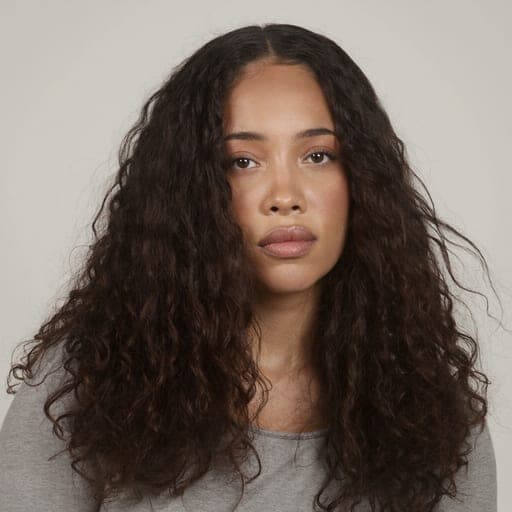
Hairstyle guide

Hairstyles for a Square Face

A square face has a defined jaw with a visible corner at the back, and a forehead, cheekbones and jaw of roughly similar width. It photographs extremely well — it is a common model face — and it does not need fixing.

What most advice is actually doing is offering a choice between two directions: soften the corners, or lean into them. Both are legitimate. The cuts below lean toward softening, because that is what people usually arrive looking for, but a strong jaw framed deliberately is a look, not a problem.

The aim

Soften the corners rather than hide them. Curves, texture and diagonal lines break up the straight edges of the jaw.

The mistake to know about first

The blunt bob that ends exactly at the jaw. It draws a straight horizontal line along the strongest straight line you already have, doubling it. Take the same bob an inch or two below the jaw and it works.

9 cuts that suit a square face

Each of these carries the reason it works and what it costs you in upkeep — the half of the decision that gets left out most often.

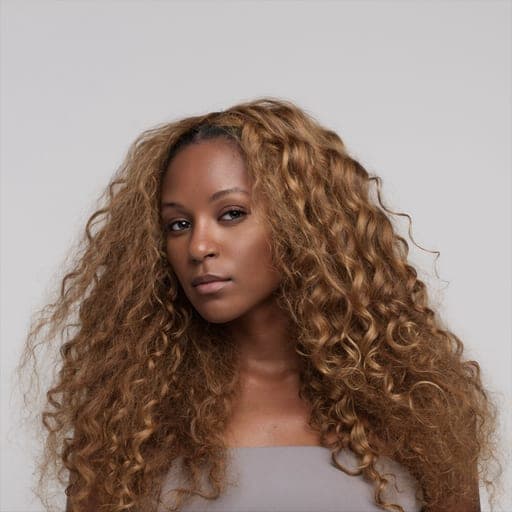
A woman with long layers: Shoulder-length or longer, cut in graduated layers so the hair moves instead of hanging in one block.LongAI illustration

Long Layers

Shoulder-length or longer, cut in graduated layers so the hair moves instead of hanging in one block.

Why it works: The vertical line lengthens a round face, and the softness at the ends takes the edge off a strong jaw.

Low upkeepTrim every 10–12 weeks. Air-dries acceptably.
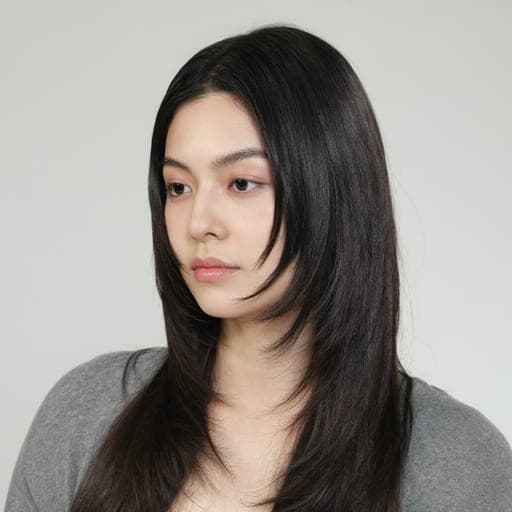
A woman with face-framing layers: Long layers cut shorter around the face only, starting at or below the cheekbone.LongAI illustration

Face-Framing Layers

Long layers cut shorter around the face only, starting at or below the cheekbone.

Why it works: Diagonal lines across the cheek break up a square jaw and a long straight cheek line at once.

Some upkeepTrim every 8–10 weeks or the shortest pieces lose their shape.
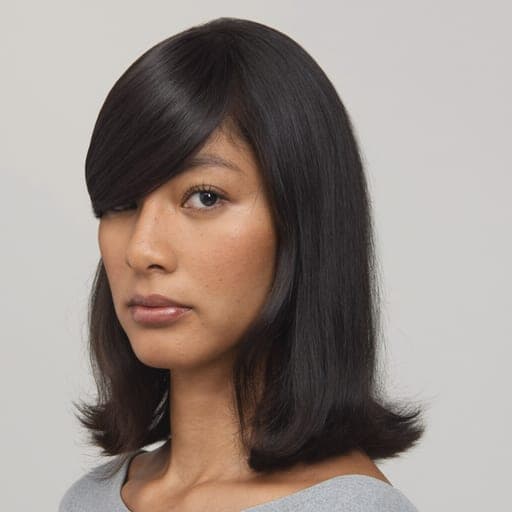
A woman with side-swept fringe: A fringe cut on an angle and worn across the forehead to one side.Mid-lengthAI illustration

Side-Swept Fringe

A fringe cut on an angle and worn across the forehead to one side.

Why it works: The diagonal softens angular corners and hides forehead width where the face is widest up top.

Some upkeepTrim every 4–6 weeks. Needs drying in the right direction.
A woman with shoulder-length shag: Heavily layered and textured through the mid-lengths, usually with a fringe.Mid-lengthAI illustration

Shoulder-Length Shag

Heavily layered and textured through the mid-lengths, usually with a fringe.

Why it works: Texture in every direction breaks up straight edges and adds width where the face is narrow.

Low upkeepTrim every 10–12 weeks. Designed to look better unstyled.
A woman with wolf cut: A shag taken further — short, heavy layers at the crown falling into wispy lengths.Mid-lengthAI illustration

Wolf Cut

A shag taken further — short, heavy layers at the crown falling into wispy lengths.

Why it works: Height at the crown lengthens a round face while the messy ends soften a hard jaw.

Low upkeepTrim every 10–12 weeks. Thrives on air-drying.
A woman with butterfly cut: Long hair with two layer lengths — short face-framing pieces over long ends, so it reads as short and long at once.LongAI illustration

Butterfly Cut

Long hair with two layer lengths — short face-framing pieces over long ends, so it reads as short and long at once.

Why it works: The shorter top layers add width at the cheek while the length keeps the overall line vertical.

Some upkeepTrim every 8–10 weeks; needs volume at the roots to work.
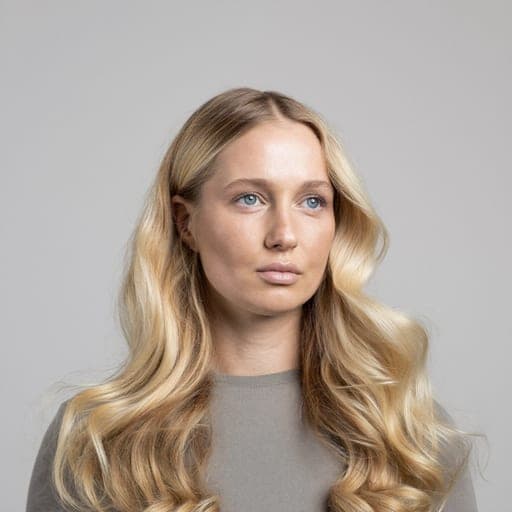
A woman with soft waves: Mid-length or long hair waved loosely, with the bend starting below the ear.LongAI illustration

Soft Waves

Mid-length or long hair waved loosely, with the bend starting below the ear.

Why it works: Curves are the direct answer to straight lines — a hard jaw, a long cheek, a sharp cheekbone.

High upkeepThe cut is easy; the waves are a daily job unless your hair does it naturally.
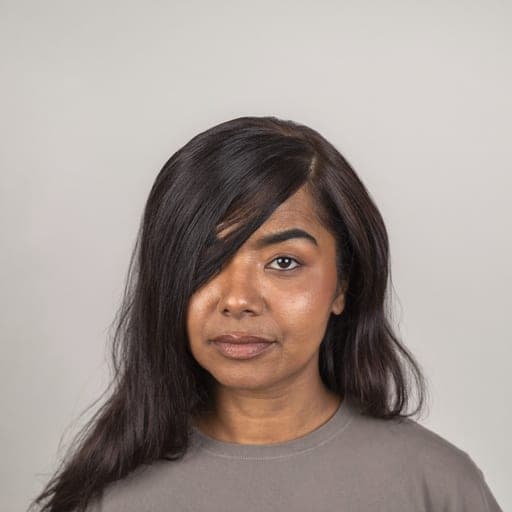
A woman with deep side part: Any length, parted far to one side so the hair falls asymmetrically across the forehead.LongAI illustration

Deep Side Part

Any length, parted far to one side so the hair falls asymmetrically across the forehead.

Why it works: An asymmetric line is the cheapest way to break up a symmetrical, wide or angular face.

Low upkeepFree — it's a parting, not a cut. Worth trying before you book anything.
A woman with volume at the crown: Any mid or long cut, dried with lift at the roots so height sits above the forehead.Mid-lengthAI illustration

Volume at the Crown

Any mid or long cut, dried with lift at the roots so height sits above the forehead.

Why it works: Height at the crown adds length to a face that is as wide as it is long.

Some upkeepA styling habit rather than a cut — a round brush and five minutes.

Fringe and bangs for a square face

A straight-across blunt fringe adds a third horizontal to a face that already has two strong ones — the jaw and the hairline. It is the fringe most likely to make a square face read severe.

A side-swept fringe does the opposite job with the same hair: the diagonal cuts across both horizontals and softens the corners at the temples.

Curtain bangs also work, particularly worn a little longer so the ends land near the cheekbone and add curve where the face is straightest.

What to think twice about

  • Blunt bob ending exactly at the jaw
  • Straight-across blunt fringe
  • Severe slicked-back styles

The pattern is straight lines meeting straight lines. Blunt cuts at the jaw, blunt fringes and severe slicked-back styles all sharpen angles that are already the strongest feature of the face — fine if that is the intent, but rarely what someone asking this question wants.

How to tell if this is your shape

Width at the cheekbones and length from hairline to chin are close to equal, as with a round face. The difference is entirely in the jaw.

Run a finger from your earlobe along the jaw to your chin. If it turns a corner, you are square. If it curves continuously, you are round. That corner is what every square-face recommendation is responding to.

Or measure it from a photo — it takes a few seconds and runs entirely in your browser.

The same proportions decide your frames, and the answer is not always the same one: glasses for square faces.

FAQ

Common questions

Should I hide my jawline?
Only if you want to. A strong jaw is a defining feature and plenty of people build their look around it. The cuts here soften the angles because that is the usual ask, but a sleek style that frames the jaw squarely is a deliberate choice, not a mistake.
Does a square face suit long hair?
Yes, and it is the easiest option. Length below the jaw means the hair's own line no longer competes with the jaw's, and soft layers or waves through the mid-lengths add the curve that does the softening.
What about a bob — is it completely out?
No, the length is what matters. A bob ending at the collarbone or a couple of inches below the jaw is fine. It is specifically the one landing level with the jaw corner that creates the problem.